What to see here
Sera stands at the foot of the hills north of Lhasa. Founded in 1419 by Jamchen Choje Shakya Yeshe, it is one of the six great Gelug monasteries. The name is variously explained by the wild roses (sera) at the foot of the hill or by a hailstorm; both versions are told locally. The compound spreads up the slope in white walls and gilded roofs, with the bare rock of Sera Utse behind it.
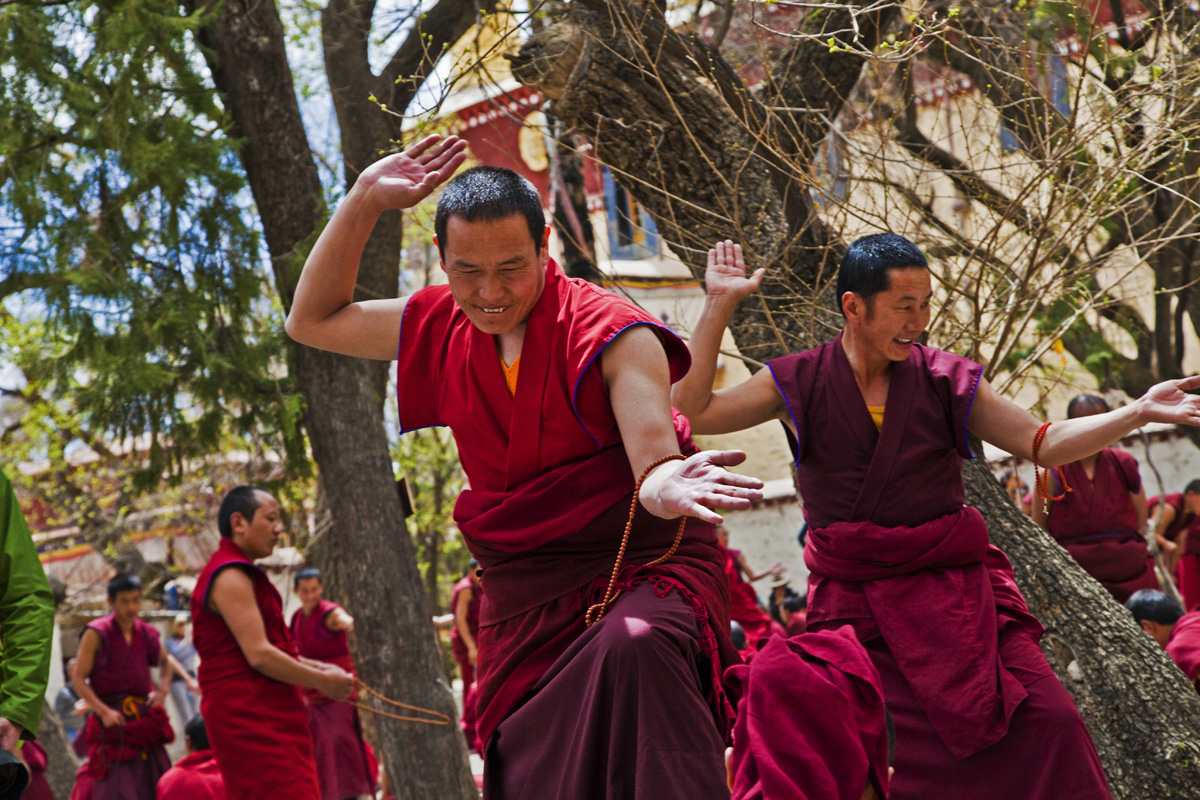
Two things stand out. The debating courtyard, where monks pair off in the shade of the trees through the afternoon: the defender sits and answers while the questioner stands, claps, stamps and swings his beads. And the Hayagriva chapel with its statue of the horse-headed deity, widely held to be powerful, the queue often running out into the yard.
Behind the monastery a path climbs to the shoulder of Sera Utse for a view over the whole Lhasa valley. It is short but steep, starting at 3,700 m: take it slowly, about an hour up and down to the viewpoint, and expect wind.
The story behind this place
Sera's founding is tied to the Ming court. Shakya Yeshe was summoned to Nanjing by the Yongle Emperor and given the title Great Compassionate Dharma King; he returned with funds and built this monastery, which is why Han influence shows in parts of its architecture and murals.
Of the Hayagriva chapel the monastery tells a story of a statue that spoke. Every year on the twenty-seventh day of the twelfth Tibetan month the image is carried around the monastery in a long procession known as Sera Bengqin, when the whole road fills with local people — the busiest day of the year here.
Driving there and visiting
Sera is on the north side of the city, about five kilometres from the Potala, with a car park at the gate where a foreign-plate car can stop, though it fills at peak times — arrive early. Inside, everything is steps and gravel: soft shoes.
- Debate usually runs Monday to Saturday from about three in the afternoon. It can be cancelled on holidays and during examinations, so ask at the gate rather than waiting for nothing.
- You may watch, but stand outside the marked area. Do not step into a circle, do not crowd in for face shots, and no flash at all.
- The Hayagriva chapel requires hats and sunglasses off and no photography inside. Do not cross the railings while queuing.
- No supplies on the hill walk: carry water. Do not go up in thunderstorms or at dusk; there is no signal up there.
- The halls are dark. A small torch beats flash for murals, and silence is expected in the assembly hall.
- Leave by the north road back into the city to miss the evening rush, with the sunset on Sera Utse on the way.
Pairing it with nearby stops
Sera fits the afternoon: the Potala in the morning, Sera for the debates after lunch, back to the city at dusk. For the scale of another great monastery, go west to Drepung the next morning — one east, one west, and you have seen Lhasa's monastic pair.