What to see here
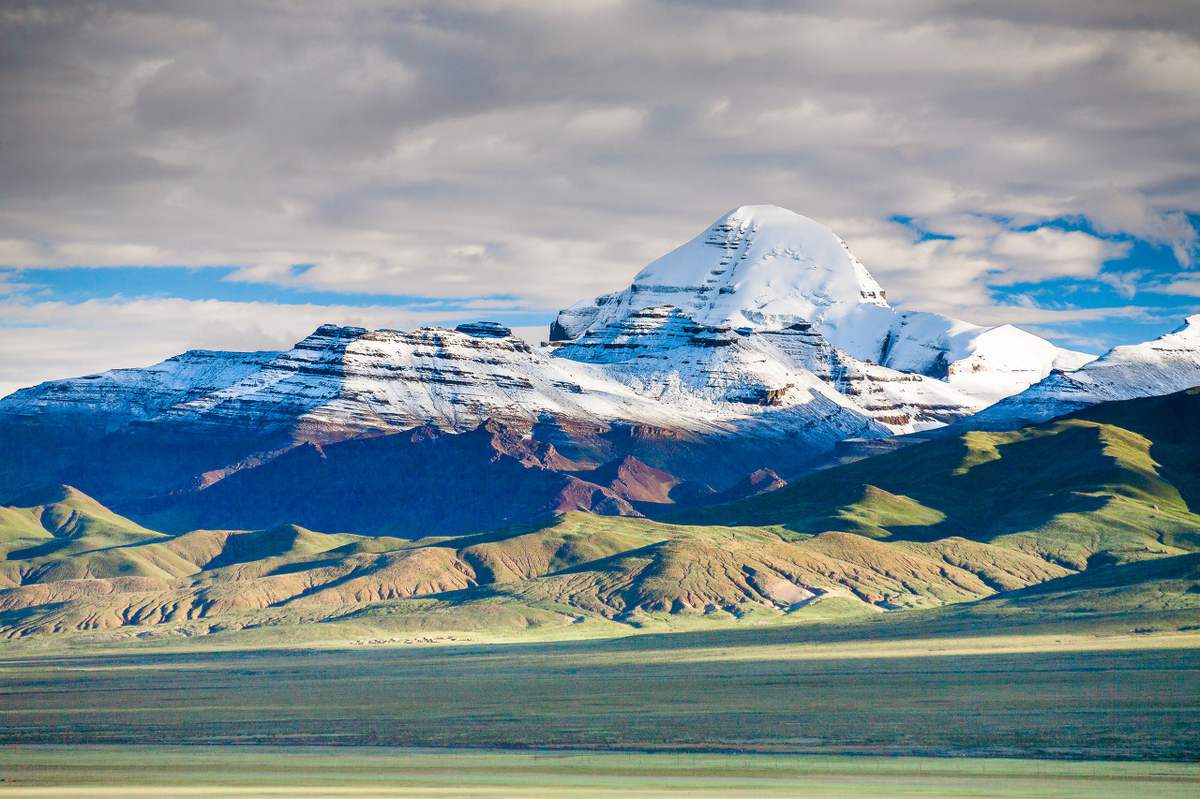
Kailash stands in Burang County in Ngari at over six thousand six hundred metres, the principal peak of the Gangdise range. Its shape is unmistakable: a near-perfect dome with four ridges falling away in symmetry, and a clear horizontal band of rock across the massif like a belt. Pilgrims from Tibet, India, Nepal and Bhutan treat it as the centre of the world.
Four religions revere it at once: Tibetan Buddhism as the seat of Chakrasamvara, Hinduism as the home of Shiva, Bon as the chief of its sacred mountains, and Jainism in its own terms. That shared reverence is almost unique, and it explains the weight the mountain carries.
The kora is the central practice. The traditional circuit is 52 km from Tarchen, over the Dolma La at about 5,640 m, past Drirapuk and Zutulpuk and back to the start. Tibetan pilgrims walk it in a day; ordinary visitors take two to three. Supply points and tent camps line the route, but they are basic.
The story behind this place
The most-told story concerns the mountain's shape. Buddhist and Bon masters are said to have contested the site, with the winner taking the peak; Buddhism prevailed and left its wheel and marks on the rock. The tale is retold all along the kora in many versions.
Another version belongs to Milarepa. He and the Bon master Naro Bonchung are said to have raced to the summit, Milarepa arriving first by his powers, and the mountain passed to Buddhism. Bon followers still walk the kora anticlockwise, and that difference of direction comes from the story.
Driving there and visiting
Lhasa to Tarchen is over a thousand kilometres on the Ngari road, three to four days via Shigatse, Saga and Paryang, or approached from Shiquanhe (Gar). Tarchen is the base for the kora with guesthouses, restaurants and supplies; a foreign-plate car stays in the town.
- Foreign travellers into Ngari need the border permit and related approvals, and the kora requires a licensed guide or support crew throughout — arrange at least a month ahead.
- Two to three days is the sane plan: Drirapuk the first night, over the Dolma La to Zutulpuk the second, back to Tarchen the third. One-day circuits are for the very fit only.
- The Dolma La is above 5,600 m. Cross early; wind and weather build after midday. Do not move the flags or cairns on the pass.
- Supply points sell hot water, instant noodles and simple beds at high prices — carry enough cash, a sleeping bag and warm layers.
- Altitude is the main risk: rest a day at Tarchen first, and turn back rather than force the pass.
- The peak itself may not be climbed. Stay on the kora path and away from the ice and rock faces.
Pairing it with nearby stops
Kailash and Manasarovar sit together and are usually done as one: settle at Tarchen, walk the kora over two or three days, then rest at the lake. Without the kora, two days of sunrise and sunset between Tarchen and the lake are still worth the drive.