What to see here
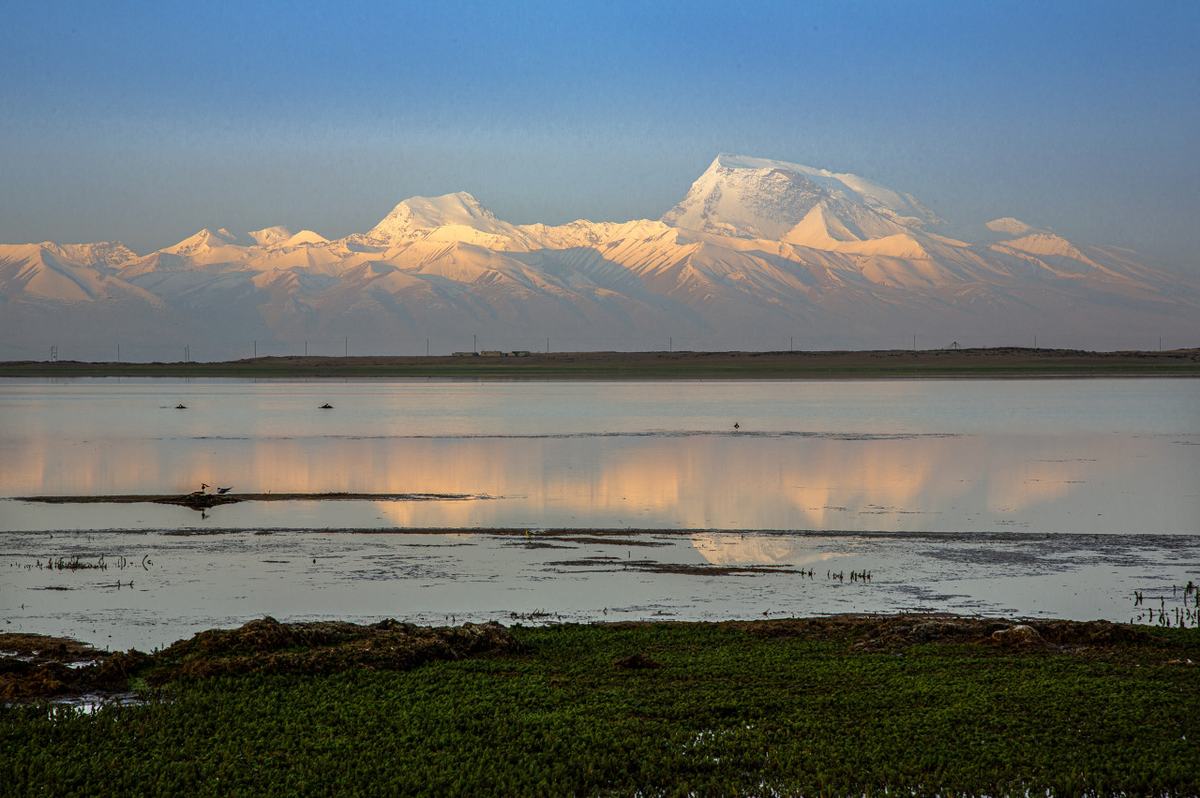
Manasarovar lies around Hor in Burang County at 4,588 m, one of Tibet's three sacred lakes and the largest and clearest freshwater body among them. Gurla Mandhata (7,694 m) stands to the south and Kailash to the north, two snow peaks holding one sheet of water — a configuration found nowhere else on the plateau.
The usual stops are Chiu and Jiwu monasteries. Chiu, on the south shore, has shallows in front of it that take the full reflection of Gurla Mandhata and make the classic photograph; Jiwu sits on a small hill on the west shore with a wider view of the whole lake and the sacred peak beyond.
The lake kora is the local practice. A full circuit runs about ninety kilometres, four to five days on foot or one day by vehicle, past monasteries, meditation caves and springs, with the greatest crowds in the horse year. Most visitors walk only a stretch of the south shore — sunrise and the reflection are enough.
The story behind this place
Tibetans call Manasarovar the mother of sacred lakes and the source of four great rivers — the Sengge, Langchen, Maquan and Peacock — which rise here and flow to the four directions. That framing ties the lake to the drainage of all South Asia, and explains why it is equally sacred to Hindus.
A widespread story holds that a naga king keeps his dwelling beneath the lake and the water stays clear because he guards it; pilgrims of sincere heart are said to see their former lives in the surface. Nobody needs to believe it, but the care with which local people draw water, wash and light lamps is plain to see.
Driving there and visiting
From Tarchen the lake is twenty or thirty kilometres on pavement, with junctions around Hor and Barga. A road runs around the lake and a foreign-plate car can take it, though parts of the south shore are gravel and sand and slippery after rain.
- At over 4,500 m the shore is cold and windy: do not stand about taking photographs, go back to the car to warm up.
- The circuit by vehicle is about ninety kilometres and takes a day, but fill the tank — there is no fuel at the lake.
- Chiu and Jiwu both have simple rooms and meals, basic to a fault: sleeping bag essential, and call ahead in season.
- No swimming, no washing vehicles, no litter at the shore; ask before taking water.
- The ridge between the sacred lake and the ghost lake shows both at once and is the best place to shoot — do not block the road when you park.
- Ngari needs the border permit and approvals; checkpoints run along the shore, so keep the papers on you.
Pairing it with nearby stops
Manasarovar and Kailash belong to the same pocket of country: the peak at Tarchen, the lake across one ridge, and further south the Burang gateway and Kojanath. Give the area three days so nothing is rushed.