What to see here
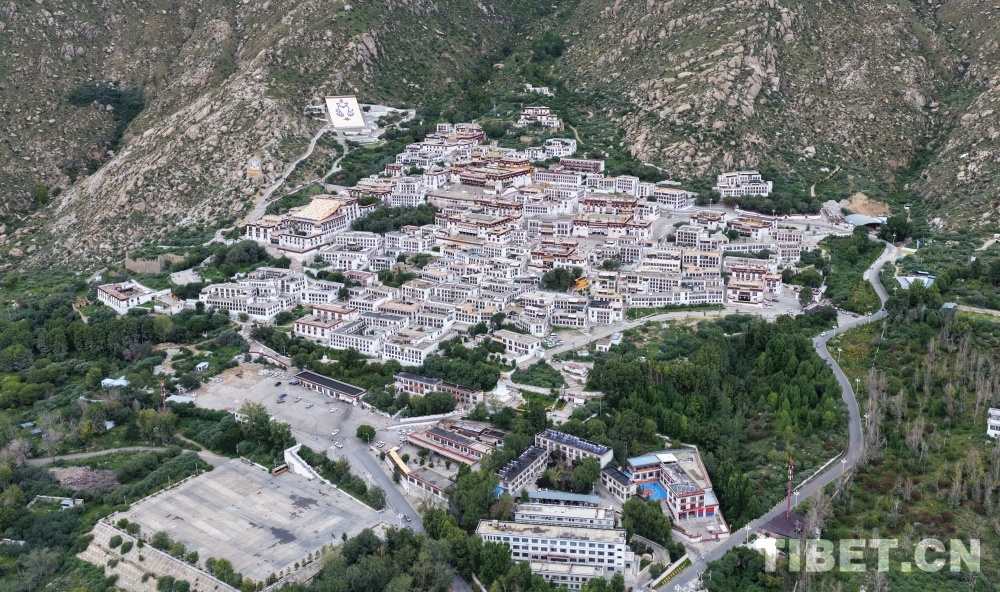
Drepung stands on the south slope of Mount Gepel Utse about ten kilometres west of Lhasa, founded in 1416 by Jamyang Choje Tashi Palden, a disciple of Tsongkhapa. At its height it housed close to ten thousand monks, the strongest Gelug house and the largest monastery in Tibet. The name means “heap of white rice”, and the stacked white buildings on the slope explain it.
The Tsogchen assembly hall is the one to see: 183 columns with carved capitals and a floor that once held thousands of monks chanting, a scale rare in Tibet. Ganden Potrang is the other: under the fifth Dalai Lama this was briefly the seat of government and religion, and the courtyards are grander than elsewhere. Murals, woven banners and thangkas are well preserved; a slow visit takes a day.
The route runs uphill. From the gate at the foot to the assembly hall is a long climb from 3,700 m to over 3,800 m, harder than the numbers suggest. Most drivers take the car to the mid-hill car park and walk the last stretch.
The story behind this place
The Shoton thangka is unveiled here. At dawn on the thirtieth of the sixth Tibetan month a vast embroidered image of Shakyamuni is rolled down the display frame on the slope, covering the whole face of the hill; people fill the road before light and the queue runs from the foot to the top. It is one of the most spectacular sights of the Lhasa year, and the monastery only opens properly once the thangka is folded away.
Drepung also carries a political history. Under the fifth Dalai Lama, Ganden Potrang was the seat of combined religious and civil power before the move to the Potala, and many of the house rules and rituals date from that period. Older monks describe the old monastery as a hill town of its own, with a printing house, workshops and granaries.
Driving there and visiting
Ten kilometres west of the city on good roads, with a narrow winding climb before the gate. A foreign-plate car can go up to the mid-hill car park; do not stop on the roadside, it blocks everyone behind. If you are fit, park at the foot and walk up.
- Buy the ticket at the foot gate, real-name on your passport. The climb is steep: drive slowly and give way to descending cars at the passes.
- The walk from the foot to the assembly hall takes thirty minutes to an hour depending on pace. A free shuttle runs to the mid-hill car park — ask staff at the gate.
- At nearly 3,800 m, walk uphill slowly: ten steps then a pause beats pushing through. Carry water and do not go up hungry.
- No photography, hats off, no noise inside. The cushions in the assembly hall belong to the monks; do not sit on them.
- On the Shoton unveiling day the road is closed and crowds are heavy: leave at dawn, or better, do not drive at all and use monastery transport.
- On the descent watch brake temperature: use a low gear on the long downhill instead of riding the brakes.
Pairing it with nearby stops
Drepung is west of the city and worth half a day on its own: up early for the white terraces in morning light, back to town for lunch. To see two great monasteries in one day, take Drepung in the morning and Sera in the afternoon, with an hour back in the city between them — do not climb both back to back.