What to see here
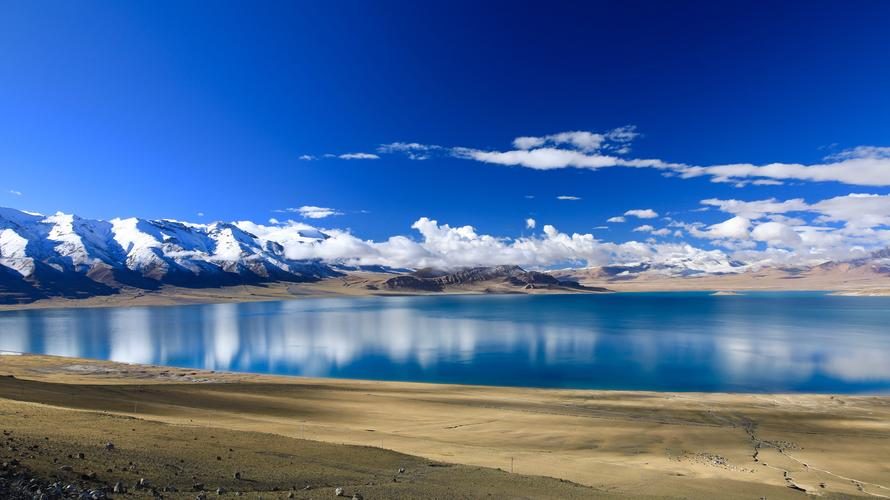
Dangra Yumtso lies in Nyima County in northern Tibet at over 4,500 m and is the chief sacred lake of Yungdrung Bon. Long and narrow, running north to south, it has the Dargo snow range (over six thousand metres) on the east shore and rolling grass and hills west, with water of extreme clarity and a deep blue.
Bon practitioners treat the place as a seat of practice. Meditation caves and old monastery ruins line the east shore and the kora follows the water; at the southern end sits Wumbu South village, right on the lake, in Tibetan stone and timber houses where you can sleep and eat — the best base in the area.
The Shangshung remains are worth the detour: Wumbu is counted among the core areas of the old kingdom, with ruined castles and stone foundations near the village and caves in the cliffs above. See the lake first, then the ruins, and its standing in Bon makes sense.
The story behind this place
Bon tradition holds the lake as the dwelling of a goddess with the Dargo range as her guardian; lake and mountain are a pair, and the kora goes round the mountain first and then the lake, anticlockwise — the reverse of the Buddhist direction and the clearest marker of Bon practice.
Bon symbols can still be read on the old houses at Wumbu. Older residents describe walking the full kora every year in the Tibetan calendar, ten days or more, fed by herders along the way; the road has changed that, but a few still walk it the old way each year.
Driving there and visiting
From Nyima town to Wumbu South village the road is pavement and dirt, the last stretch running along the lake with narrow bends. A foreign-plate car can drive it, but supplies are thin — fill the tank at Nyima.
- Wumbu South has rooms, simple and few. Call ahead in season; village food is mostly noodles and yak meat.
- The kora is one day by vehicle and seven or eight on foot, the trail rough; on foot you need a guide and yaks.
- Bon walkers go anticlockwise. Follow the local direction, and leave practitioners alone.
- At over 4,500 m the shore is cold and windy; on the kora carry full warm layers and sun protection.
- No nets and no swimming; carry all rubbish out; stay away from wetlands and nests.
- Signal exists only in the village — bring cash.
Pairing it with nearby stops
Dangra Yumtso, Siling Tso and Nyima make one northern stretch: Siling to Nyima, on to Wumbu South for a night, the lake and the Shangshung ruins the next day, then west into Ngari or back.